Staying Warm in Yoga Nidra: The Questions People Ask Every Autumn
Quick Answer: You get cold in yoga nidra because stillness plus deep relaxation lowers your body’s heat production and shifts blood flow, so a room that felt fine when you lay down is genuinely too cool twenty minutes later. Dress and cover as though the room is several degrees colder than it is — blanket, socks, and something over the abdomen — and set up before you start rather than adjusting mid-session.
You lie down and it feels comfortable.
Twenty minutes later you are shivering slightly and thinking about nothing except your feet.
The room did not change. Your heat production did.
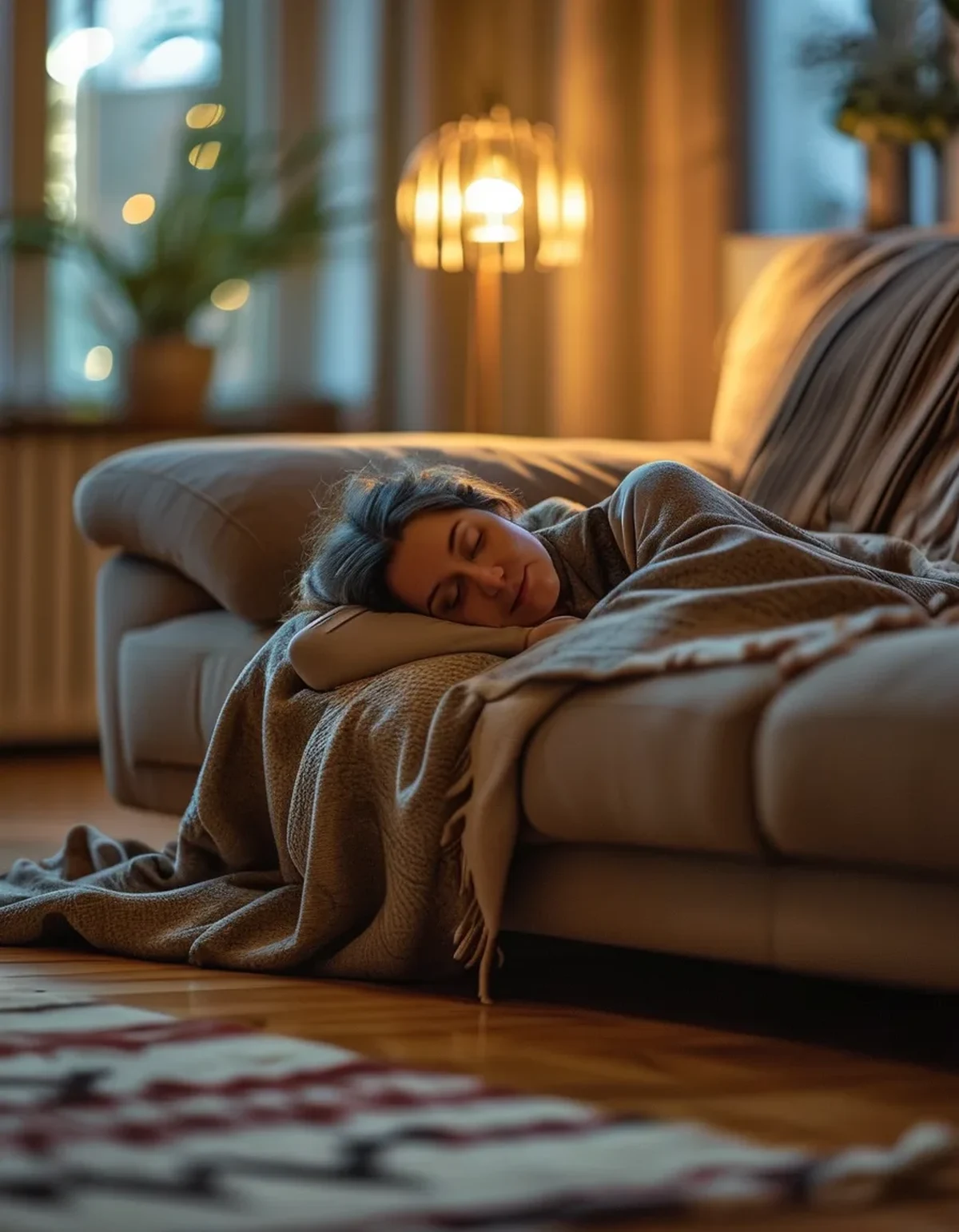
Why do you get so cold lying still?
Four things happen at once, and they all point the same direction.
Muscle activity is your main heat source, and you have switched it off. Even sitting produces meaningful heat through low-level muscle tone. Lying completely still for 30 minutes removes most of that, so heat production drops while heat loss continues.
Deep relaxation shifts blood toward the skin. As the parasympathetic nervous system takes over, peripheral blood flow increases — which feels pleasant and also means you radiate heat away from the surface faster.
Your body temperature naturally falls in the evening. Core temperature drops as part of the normal circadian pattern in the hours before sleep. An evening nidra practice sits right in that decline, which is part of why it helps with sleep and part of why you get cold.
And the floor conducts heat away. Lying on a hard floor, especially over concrete or tile, pulls heat out of your back continuously. Conduction through the floor is often the biggest single loss, and it is the one people address last.
What should you actually set up before you start?
Five items. Set them up before you lie down, because getting up to fetch a blanket at minute fifteen ends the practice.
A blanket over the whole body, including feet. Not a throw over the torso. The extremities are what get cold first and what pull your attention hardest.
Insulation underneath, not just on top. A mat plus a folded blanket, or a rug. This matters more than the top layer and almost nobody does it.
Socks. Cold feet are the single most common complaint in autumn nidra, and the easiest to prevent.
Something over the abdomen. A small folded blanket or a weighted eye pillow over the belly adds warmth exactly where relaxation increases blood flow away from the core, and many people find the light pressure calming in itself.
And an eye covering. Not for warmth — it reduces visual stimulation and helps the practice — but it also stops the small draught you get across the face in a cool room, which is more distracting than it sounds.
Dress for a room several degrees cooler than the actual temperature. If you are perfectly comfortable at the moment you lie down, you will be cold by minute twenty.
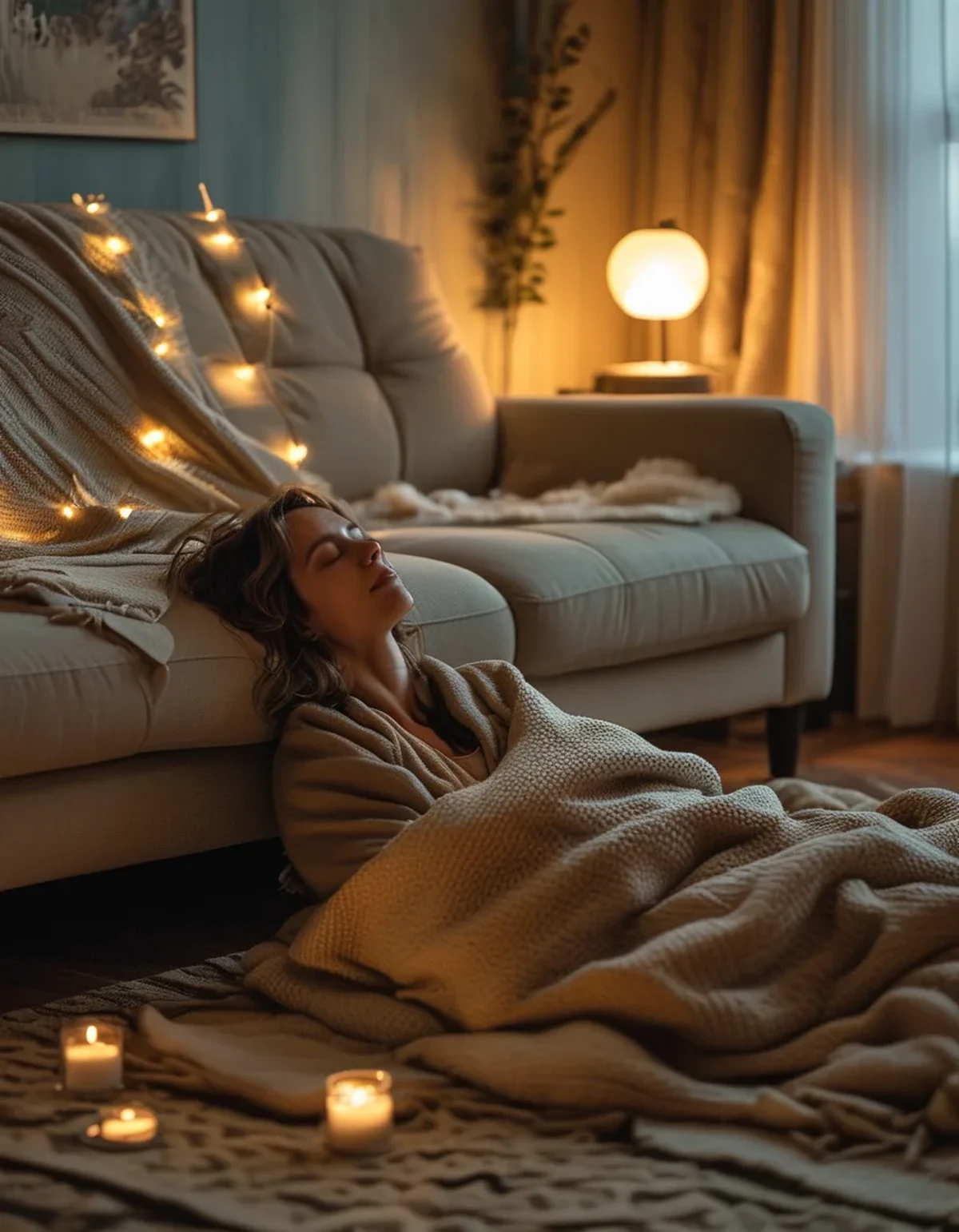
Does being cold actually ruin the practice?
Yes, and for a specific and interesting reason.
Cold is a signal your nervous system cannot ignore. Yoga nidra works by guiding attention systematically around the body while the nervous system settles toward a state between waking and sleep. Thermal discomfort keeps pulling attention back to the body’s surface, which is precisely the opposite of what the body scan is trying to do.
It also prevents the physiological shift. Deep relaxation involves a drop in sympathetic activity. Being cold does the opposite — cold triggers vasoconstriction and a mild stress response, and shivering is muscle activity, which is the opposite of stillness.
And it interferes with the sleep benefit. Practices like nidra and NSDR are often used before sleep because the transition toward sleep involves a falling core temperature and a settled nervous system. Being uncomfortably cold interrupts that, so you get the position without the effect.
Practical upshot: warmth is not a comfort luxury in this practice, it is a prerequisite. Being slightly too warm is far better than being slightly too cold — and if you are genuinely too warm, a light blanket is easy to push off without breaking the practice, which is not true in the other direction.
What about the room itself?
Five environmental factors, in order of how much they matter.
Draughts matter more than temperature. Moving air removes heat far faster than still air at the same temperature. Check for a draught at floor level — under doors, from a vent, along a hallway — because that is exactly where you are lying. Moving your mat a metre often solves more than turning the heating up.
Floor surface matters enormously. Concrete, tile and laminate conduct heat away far faster than carpet. Insulate from below on any hard floor.
Warm the room in advance, then turn the heating off. A running heating system produces noise, moving air, and thermostat cycling. Warm the room for 20-30 minutes beforehand and switch it off for the session.
Consider practising in bed. For an evening nidra intended to lead into sleep, there is no rule against it. Warm, insulated, and no transition afterwards.
And watch the humidity. Heated air is dry air, and a dry throat is another small distraction across a 30-minute practice. A glass of water beforehand and a humidified room both help. This is general information, not medical advice — anyone who feels persistently cold, or has a condition such as Raynaud’s or a thyroid disorder, should raise it with their doctor rather than assume it is the room.
FAQ: Yoga Nidra Warmth Questions, Answered
Why do I get cold when I did not in summer?
Your heat production drops as soon as you stop moving, and the room is colder. In summer the margin absorbed it; in October it does not.
Should I use a blanket even if the room feels warm?
Yes. Comfortable at minute zero means cold at minute twenty. A blanket you can push off is the correct setup.
Do socks really matter?
A lot. Cold feet are the most common distraction in autumn practice, and the easiest thing to prevent.
Is it better to practise in bed in winter?
For an evening session leading into sleep, it is a completely reasonable choice — warm, insulated, and no transition afterwards.
What about insulation underneath?
More important than the top layer on any hard floor. A mat plus a folded blanket, or a rug.
Should I heat the room during the session?
Warm it beforehand and switch the heating off. Fan noise, moving air and thermostat cycling are all distractions.
Why does a weighted eye pillow help?
It reduces visual stimulation, blocks a facial draught, and many people find gentle pressure calming. A small folded blanket over the abdomen does something similar.
TL;DR:
- Stillness plus deep relaxation drops your heat production and shifts blood to the skin — you cool faster than you expect.
- Insulate underneath, not just on top. A hard floor conducts heat away continuously.
- Blanket over everything including feet, socks, something over the abdomen — set up before you lie down.
- Cold keeps pulling attention back to the body’s surface, which is exactly what the practice is trying to release.
- Warm the room beforehand and turn the heating off, and check for a draught at floor level.
Add socks and a blanket underneath to tonight’s session. It is the difference between finishing the practice and enduring it.
Keep Reading
This article is for general informational purposes only and is not medical advice. Always consult a qualified health professional for guidance specific to you.