Can You Do Yoga Nidra Sitting Up? The Position Questions, Answered
Quick Answer: Yes, you can practice yoga nidra sitting up, and for some people it works better. Lying down is the traditional position because it minimizes muscular effort, but sitting reduces the chance of falling asleep, works better after eating, and is often necessary in late pregnancy, with reflux, or with back conditions. The tradeoff is more physical effort competing for your attention.
Why is lying down the traditional position?
Because effort is the enemy of the practice
Yoga nidra aims for a state between waking and sleep, and any muscular effort keeps the nervous system engaged. Lying supine in savasana requires essentially zero postural work, which is exactly the point. Nothing is holding you up but the floor.
Because it removes decision-making about the body
When you’re lying flat, there’s no ongoing question of whether your posture is right. Seated, there’s a small, continuous stream of postural micro-adjustments that occupies attention.
Because it makes body scanning easier
The rotation of consciousness - moving attention systematically through the body - works most easily when every part is supported and symmetrical. Lying flat gives you that by default.
When is sitting actually better?
When you keep falling asleep
This is the most common reason and it’s a legitimate one. Falling asleep during nidra isn’t a failure, but if it happens every single time, you’re napping rather than practicing. Sitting upright makes the sleep threshold harder to cross while keeping most of the restfulness.
After eating
Lying flat within an hour or two of a meal is uncomfortable for many people and genuinely problematic if you have reflux. A midday nidra after lunch is far more comfortable seated.
In late pregnancy
Lying supine in the third trimester is generally discouraged because of pressure on the vena cava. Seated practice, or side-lying with support, are the standard alternatives. This is general information, not medical advice - your provider’s guidance takes precedence.
With certain back conditions
Some people find lying flat aggravates lower back pain, especially without knee support. A supported seated position, or lying with knees bent over a bolster, is often more comfortable.
When you’re practicing somewhere you can’t lie down
An office, a plane, a waiting room. A 15-minute seated nidra in a desk chair is a legitimate practice, and the accessibility is worth more than the theoretical purity of the position.
How do I set up a seated practice properly?
Support the spine, don’t hold it
Use a chair with a back, and actually use the back. Cross-legged on the floor with an unsupported spine requires continuous muscular effort, which fights the practice. A dining chair or armchair with a cushion at the lower back is better than a meditation cushion for this purpose.
Feet flat, hands supported
Both feet on the floor - use a book or block if the chair is too tall. Hands resting on your thighs or on the chair arms, not clasped, so your shoulders can release.
Deal with the head
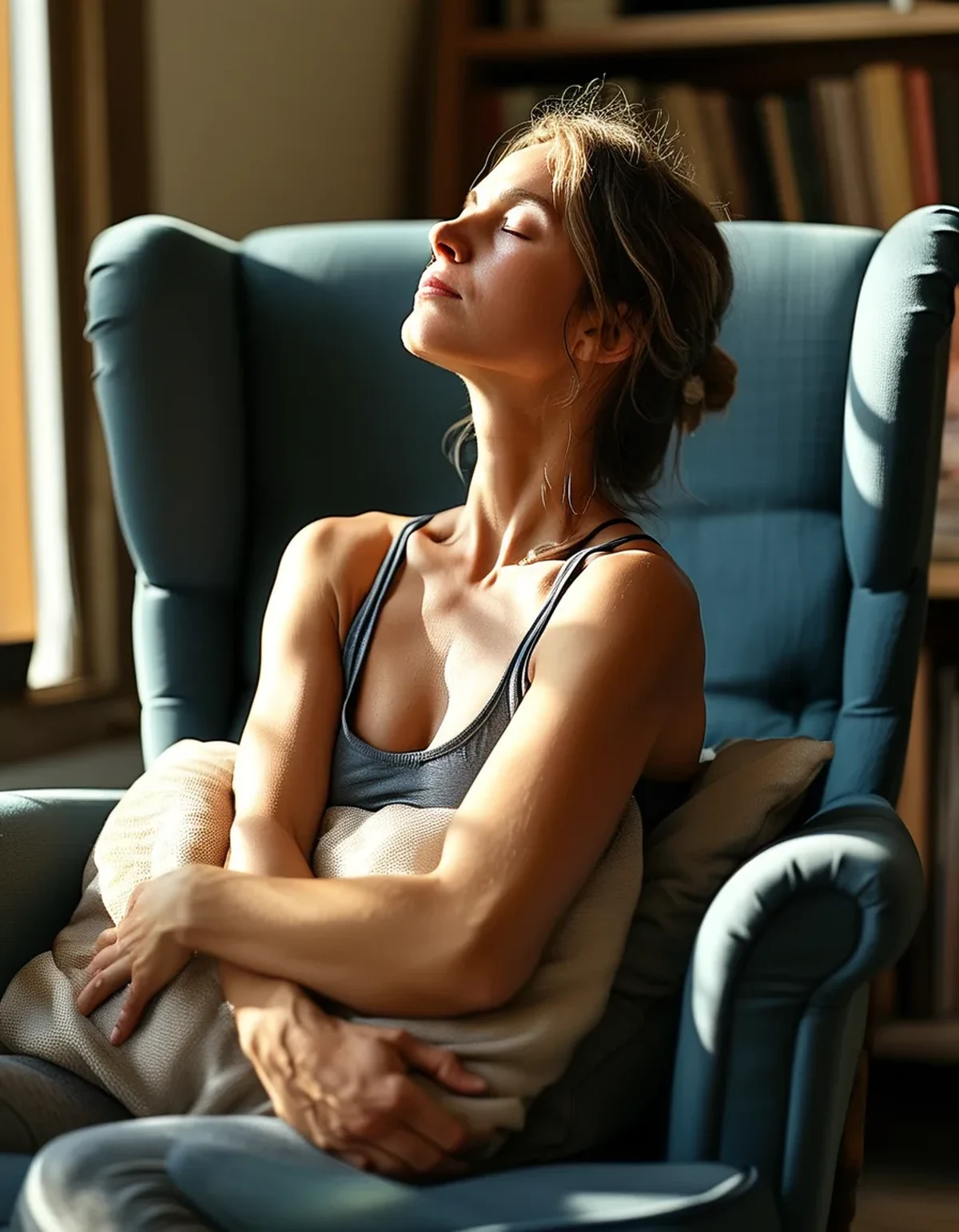
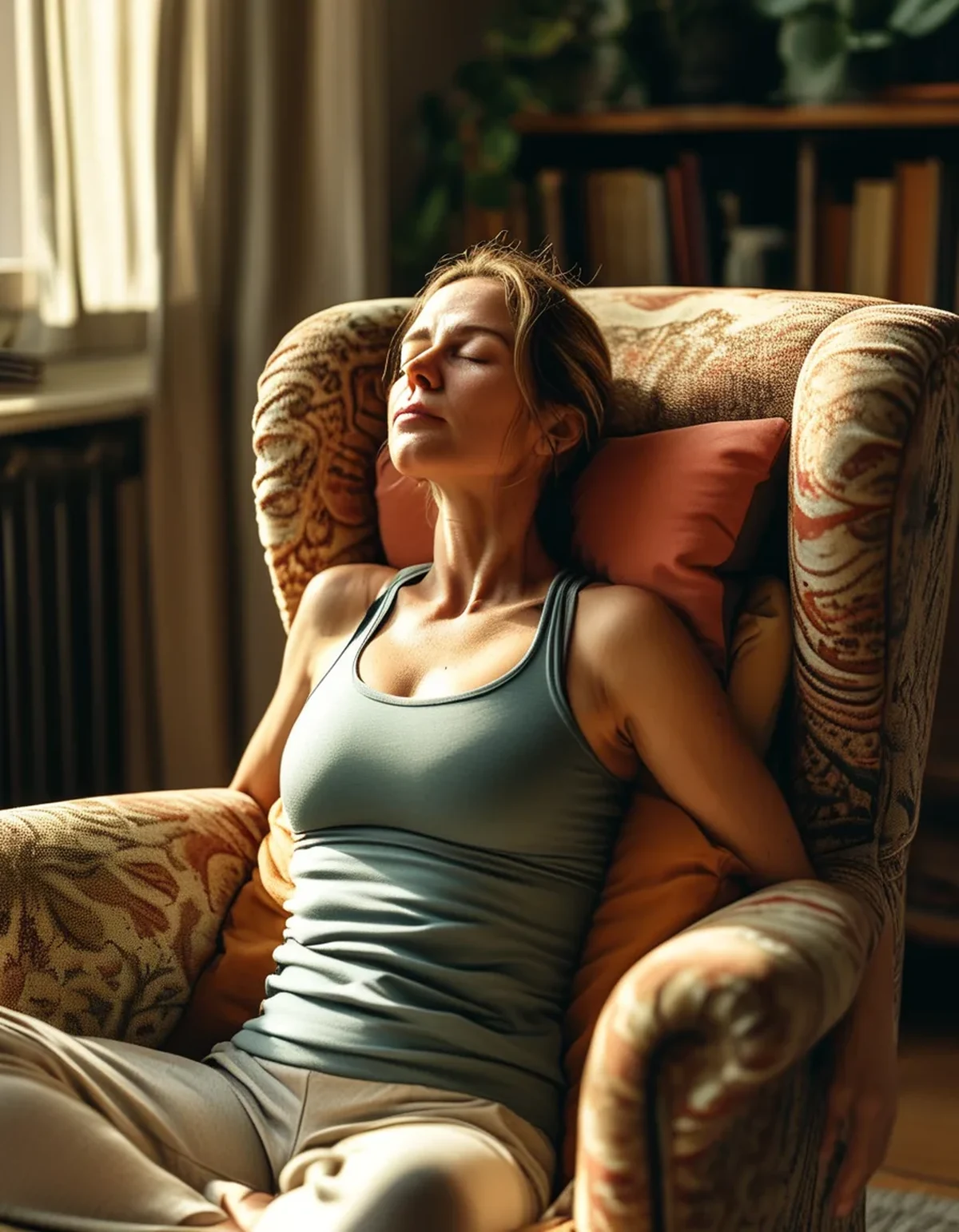
The head is the problem in seated nidra. As you relax, it drops forward, which jolts you back to alertness. A high-backed chair or an armchair with a headrest solves this completely. Without one, a wall behind you and a folded blanket for the head works.
Reclined is the sweet spot
If you have a recliner or a chair that tilts back 20-30 degrees, that’s arguably the ideal position for yoga nidra - nearly the postural ease of lying down with substantially less sleep pressure than flat. Many people who struggle with both positions find the reclined middle ground works immediately.
Keep warm
Body temperature drops during deep relaxation, and it drops noticeably in a seated position where less of you is in contact with anything. A blanket over the legs is not optional as evenings cool into autumn.
What actually changes about the experience?
The body scan feels different, and that’s fine
Seated, the sensation of your legs and lower body is less prominent than when lying flat. Some people find the rotation of consciousness less vivid; others find it more focused because there’s less overall sensory input from the back body.
You’re more likely to stay conscious
Which is the goal, technically. Yoga nidra is meant to be practiced at the threshold of sleep, not past it. Seated practice keeps you closer to that edge.
The depth may be slightly less
Most experienced practitioners report reaching a somewhat less profound state seated than lying down. Whether that matters depends on your goal - for daytime reset, seated is often better; for pre-sleep practice, lying down wins.
Time perception is similar
The strange time distortion that makes a 30-minute nidra feel like 10 minutes or like an hour happens in both positions. That’s a function of the state, not the posture.
FAQ: Yoga Nidra Position Questions, Answered
Can I do it lying on my side?
Yes. Side-lying with a pillow between the knees is a standard alternative, especially in pregnancy. The main downside is asymmetry, which can make the body scan feel uneven.
Is it okay to switch positions mid-practice?
Ideally you’d stay still, since movement pulls you back toward ordinary waking consciousness. But moving because you’re genuinely uncomfortable is much better than lying there in pain and calling it practice.
Will I get the same benefits seated?
The research on yoga nidra is mostly conducted with supine practice, so a fully honest answer is that seated practice is less studied. Practically, practitioners report similar effects on stress and rest, sometimes with less depth. A seated practice you’ll actually do beats a supine one you keep skipping.
What about lying on the floor versus a bed?
The floor with a mat and blanket is traditional and reduces sleep association. A bed is more comfortable and much more likely to end in a nap - which is fine if that’s what you want.
TL;DR:
- Yoga nidra works seated; lying down is traditional because it minimizes muscular effort, not because sitting is wrong
- Choose seated when you keep falling asleep, after eating, in late pregnancy, with reflux, or with back conditions
- Support the spine with a chair back, keep feet flat, and solve the head-drop problem with a headrest or wall
- A reclined chair at 20-30 degrees is arguably the ideal middle ground
- Depth may be slightly less seated, but staying conscious is technically the goal anyway
The position that lets you practice consistently beats the one that’s traditionally correct.
Keep Reading
This article is for general informational purposes only and is not medical advice. Always consult a qualified health professional for guidance specific to you.