How Yoga Nidra Can Actually Help With Postpartum Sleep Recovery (Realistically)
Quick Answer: Yoga nidra can’t replace the deep, consolidated sleep postpartum parents are missing, but research suggests even a short session can produce measurable rest benefits comparable to a portion of actual sleep time, which makes it a genuinely useful tool for the fragmented, short windows of rest that postpartum life actually allows — not a full substitute, but a realistic supplement.

Can yoga nidra actually make up for lost postpartum sleep, or is that overselling it?
It’s not a replacement for deep sleep, and claiming otherwise oversells it — but some research on yoga nidra suggests that even a 20-30 minute session can produce nervous system rest benefits that partially overlap with what a nap provides, particularly for reducing stress hormone activity and mental fatigue, which matters even if it’s not biologically identical to REM or deep sleep stages.
Why does the postpartum period specifically make yoga nidra a practical fit, compared to other rest practices?
Postpartum rest windows are often short and unpredictable — a 20-minute stretch while a baby naps, rather than a full uninterrupted hour — and yoga nidra is specifically designed to be effective in shorter windows since the practice itself is often 20-45 minutes and doesn’t require achieving actual sleep to provide benefit, unlike trying to nap where falling short of real sleep can feel like wasted time.
Does yoga nidra help with the specific mental state new parents describe — ‘tired but wired’?
This is actually one of the practice’s better-suited applications — yoga nidra’s structured guidance through body awareness and breath specifically targets the nervous system activation that keeps someone feeling mentally alert or anxious despite physical exhaustion, which is a very commonly reported postpartum experience that traditional ‘just try to nap’ advice doesn’t address directly.
What Nobody Tells You About Realistic Expectations for Postpartum Yoga Nidra
The instinct to expect yoga nidra to solve postpartum exhaustion entirely sets up disappointment — it’s genuinely helpful as one tool among several (actual sleep when possible, support from partners or family, realistic expectations about the postpartum period itself), not a standalone fix. Framing it as ‘better than nothing during a fragmented rest window’ rather than ‘equivalent to real sleep’ keeps expectations aligned with what the practice can actually deliver.
FAQ: Postpartum Yoga Nidra Questions, Answered
Is it safe to practice yoga nidra very soon after delivery?
Generally yes, since it’s a passive, lying-down practice with no physical exertion, though checking with your provider is reasonable if you have specific postpartum complications or restrictions.
Can yoga nidra be done while co-sleeping or with a baby nearby?
Many new parents do practice this way out of necessity, and it can still provide benefit, though a fully quiet, undisturbed environment (when available) allows for a deeper practice experience.
How soon might someone notice a difference from postpartum yoga nidra practice?
Some people report a subjective sense of reduced overwhelm within the first few sessions, though building it into a consistent (even if irregular) part of the week tends to compound the benefit more than occasional single sessions.
TL;DR:
- Yoga nidra isn’t a substitute for deep sleep, but can provide measurable nervous system rest
- Its short, structured format fits the unpredictable, brief rest windows postpartum life actually allows
- It’s particularly well-suited to the ‘tired but wired’ mental state many new parents describe
- Treat it as one supportive tool among several, not a standalone fix for postpartum exhaustion In a period where a full night’s sleep often isn’t available, twenty structured minutes of yoga nidra is a realistic, evidence-supported way to get something out of the fragments of rest you do have.
See It in Motion
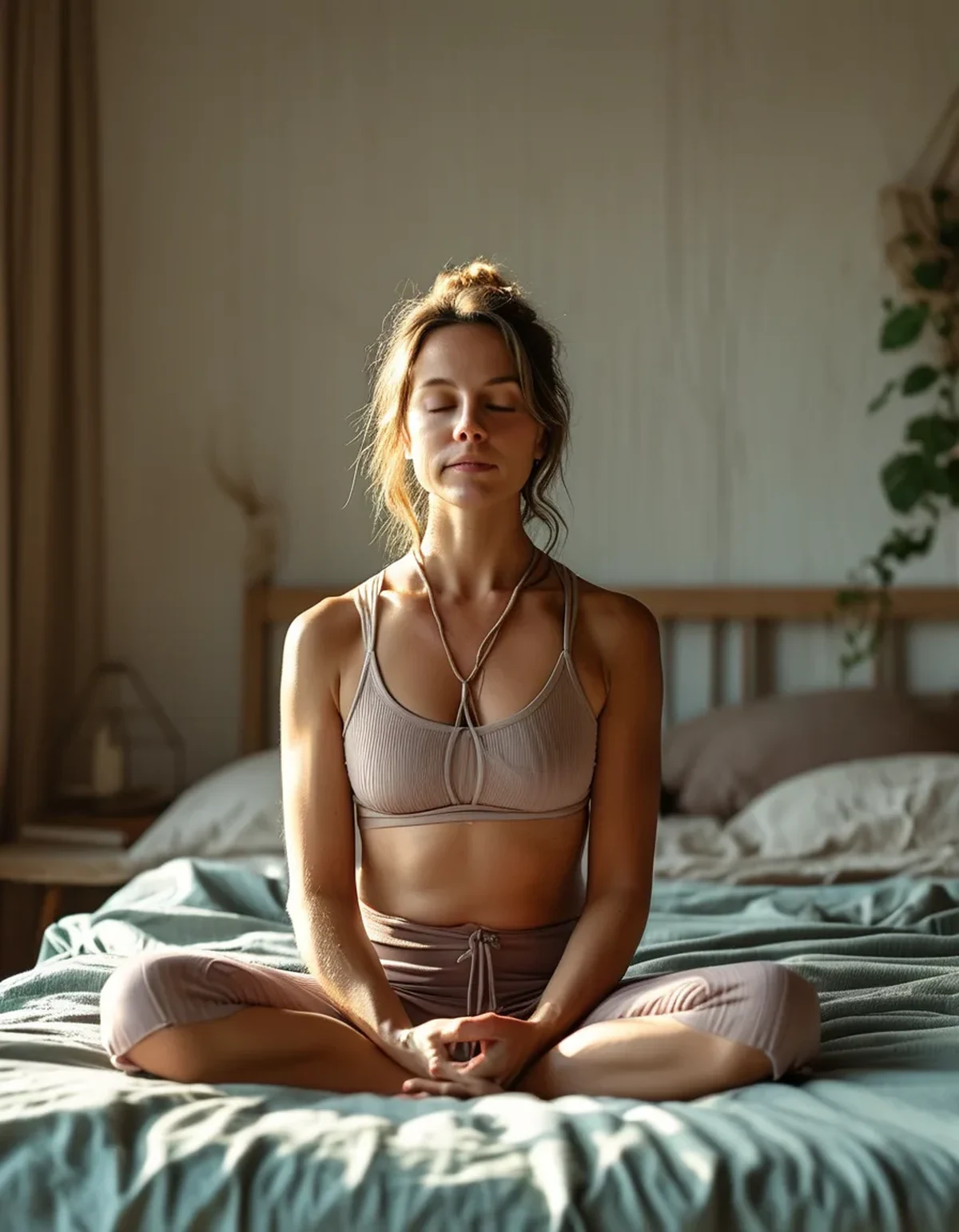
Seen here: Maternity Capris with Side Pockets — shop it on bubblelime.com
Keep Reading
This article is for general informational purposes only and is not medical advice. Always consult a qualified health professional for guidance specific to you.