Can You Do Yoga Nidra in a Noisy House?
Quick Answer: Yes. Yoga nidra does not require silence — it requires a stable point of attention, and a recorded voice through headphones provides that regardless of what is happening in the next room. Practical setup: over-ear headphones or well-fitting earbuds, an eye covering, a position that signals rest to your household, and a short verbal agreement about the next 25 minutes. Rather than resisting background noise, include it deliberately in the opening body scan so it stops being an interruption and becomes part of the environment you have already accounted for.
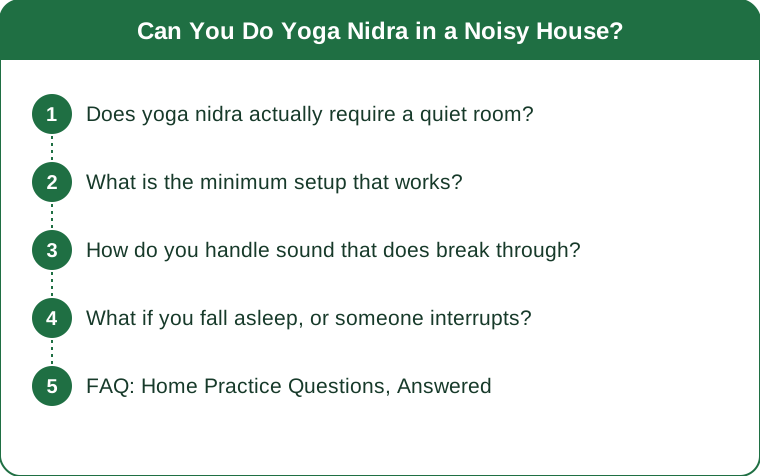
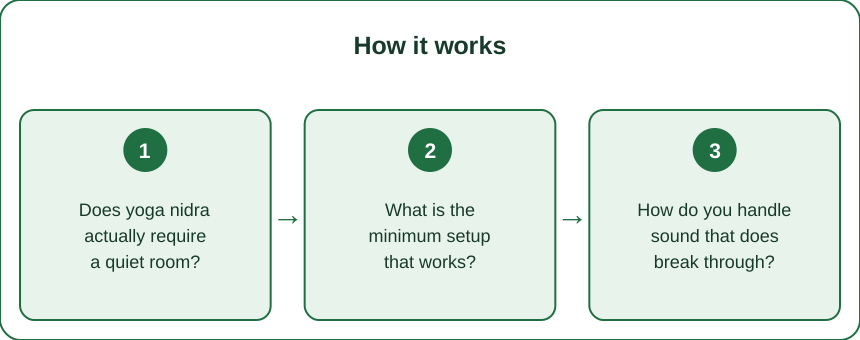
Does yoga nidra actually require a quiet room?
No, and the assumption that it does keeps a lot of people from practicing at all.
What the practice requires is a consistent anchor for attention — usually a guiding voice moving through a structured sequence. Silence is convenient because it removes competing anchors, but it was never the mechanism.
Traditional practice contexts were rarely silent either. Group settings involve other people breathing, shifting, and occasionally snoring, and the practice works fine.
The real distinction is between predictable and unpredictable sound. Steady background — traffic, a fan, a dishwasher, distant conversation — becomes part of the environment within a few minutes and stops registering. Sudden, meaningful sound — your name being called, a crash, a phone — pulls attention sharply because your brain is designed to prioritize it.
So the goal is not silence. It is reducing the number of sounds that carry meaning for you, which is a much more achievable target in a shared house.
What is the minimum setup that works?
Four things, none of them expensive.
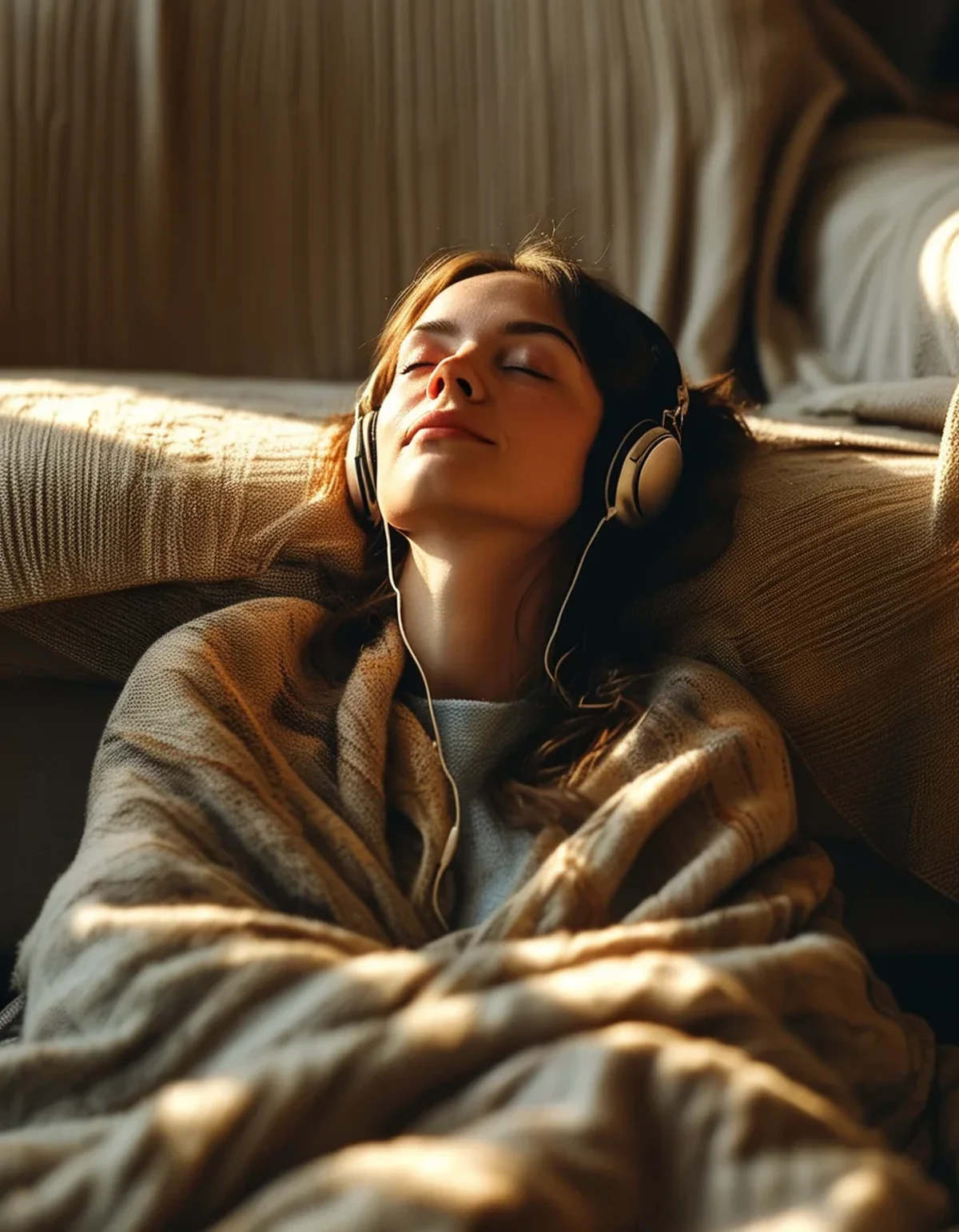
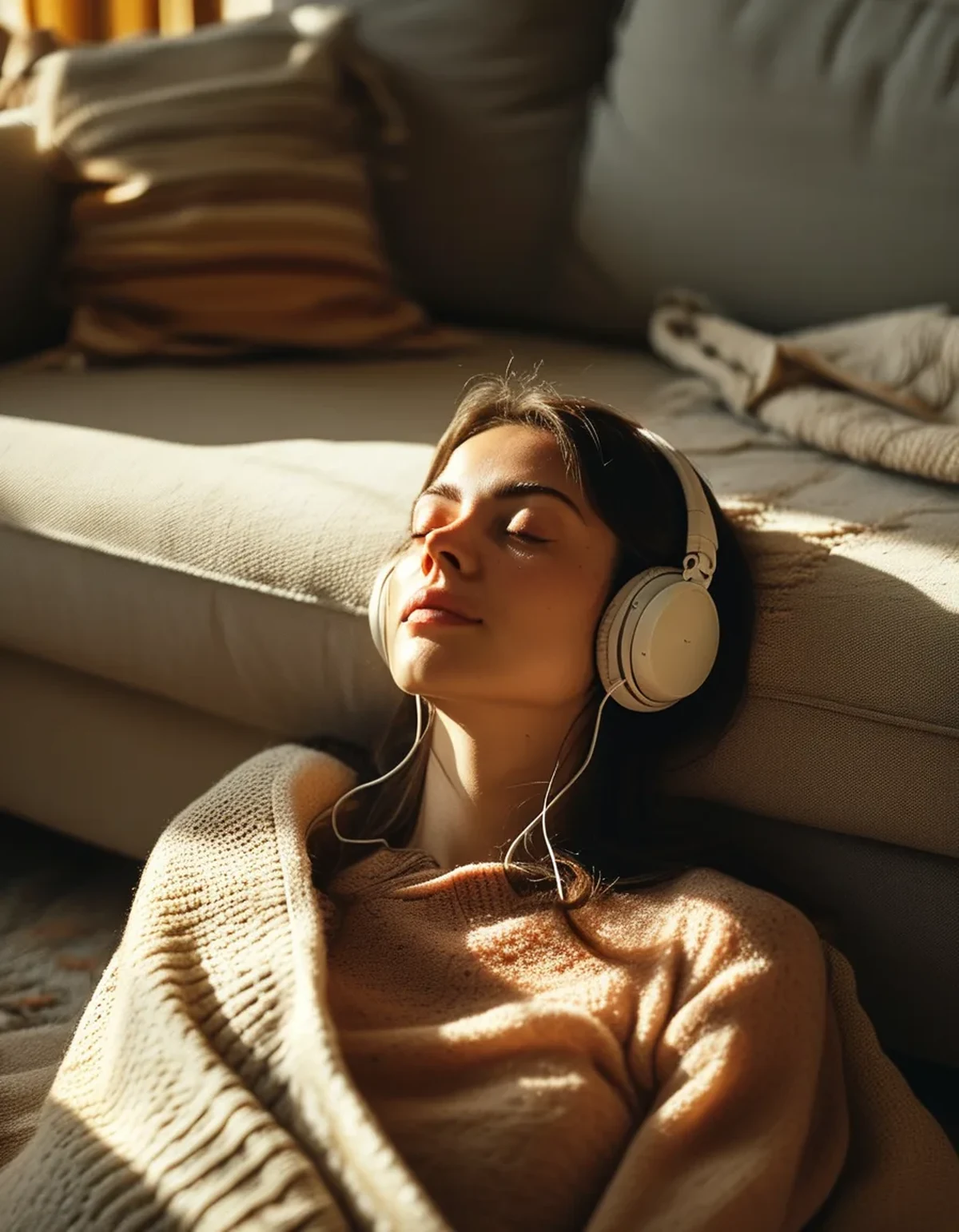
Headphones. This is the one that matters most. A guiding voice delivered directly to your ears is far more robust against interruption than one played through a speaker competing with the room. Over-ear headphones are most comfortable lying down on your back; if you tend to turn your head, low-profile earbuds work better.
Eye covering. An eye mask or a folded washcloth. Removing visual input reduces the total sensory load and makes remaining sound easier to let pass.
A blanket. Body temperature drops during deep rest, and getting cold at minute fifteen is the single most common reason home practices get abandoned partway through.
A stated boundary. Tell whoever is home: I am doing a 25-minute rest practice, please do not need me unless something is actually wrong. This is more effective than any noise-blocking equipment, because it converts unpredictable interruptions into predictable ones.
That is the entire setup. No dedicated room, no special time of day, no equipment beyond what most people already own.
How do you handle sound that does break through?
Include it rather than resisting it, and do so at the start.
In the opening minute, before the body scan, deliberately notice the sounds present: the dishwasher, traffic outside, someone upstairs. Name them silently and let them be part of the room. This does something specific — it moves those sounds from the category of interruption to the category of environment, and your attention stops flagging them as new information.
When something breaks through mid-practice anyway, the correct response is to notice it and return, without evaluating. Not to be annoyed, not to judge the practice as ruined. Attention returning is the practice, not a failure of it.
This is worth saying plainly because the most common home-practice mistake is not the noise itself. It is the frustration about the noise, which generates far more mental activity than the sound ever did. A dog barking costs you three seconds. Being angry about the dog costs you five minutes.
If the same sound recurs — a construction schedule, a neighbor’s routine — practice at a different hour rather than fighting it weekly.
What if you fall asleep, or someone interrupts?
Both are normal and neither ruins anything.
Falling asleep is extremely common, especially early on and especially in the afternoon. The practice still produces meaningful rest, though the specific state yoga nidra aims for sits between waking and sleep rather than in sleep. If you want to stay on the right side of that line: practice earlier in the day, keep the room slightly cooler, and try a position with one arm bent upward at the elbow — as it relaxes, the small movement tends to bring you back.
But if you are sleep-deprived, your body will take sleep and that is a reasonable outcome. Do not fight it every session.
Being interrupted is a matter of how you come out. Do not sit bolt upright. Take a breath, move your fingers and toes, roll to one side, and come up slowly over 20 to 30 seconds. Coming up fast from deep relaxation produces the groggy, disoriented feeling people blame on the practice itself.
If you get interrupted at minute ten of a twenty-minute session, you got ten minutes of rest. That is not nothing, and treating it as a failed session is what makes people stop practicing at home.
FAQ: Home Practice Questions, Answered
Is it better to practice with music underneath the voice?
Personal preference. Music masks household noise effectively, which is an argument for it in a busy house. Some people find it adds mental content they would rather not have. Try both for a week.
Do noise cancelling headphones help?
Yes, meaningfully, for steady background noise like HVAC or traffic. They are less effective against voices and sudden sounds, which are the ones that actually interrupt. Useful but not a complete solution.
How long should a home session be if I only have a short window?
Ten minutes is genuinely worthwhile. Shorter sessions are far more likely to actually happen in a household with other people in it, and consistency matters more than duration.
Should I practice in bed?
It works, with a caveat: if you have any difficulty sleeping at night, keeping the bed associated with sleep only is worth protecting. The floor with a mat and blanket, or a couch, keeps that boundary intact.
What about practicing with kids in the house?
Many people practice during a nap window or right after school drop-off. If neither exists, a shorter session with clear boundaries beats waiting for a quiet house that may not arrive for years. This is general information, not medical advice.
TL;DR:
- Yoga nidra needs a stable anchor for attention, not silence — headphones provide that in almost any room.
- Setup is four things: headphones, eye covering, blanket, and a stated boundary with whoever is home.
- Include the household noise deliberately at the start so it becomes environment rather than interruption.
- Frustration about noise costs far more than the noise does; noticing and returning is the practice.
- Falling asleep or being interrupted does not waste the session — come out slowly over 20 to 30 seconds either way.
The practice was never designed for ideal conditions. Set it up in the house you actually live in, and it works on a Tuesday afternoon with the dishwasher running.
Keep Reading
This article is for general informational purposes only and is not medical advice. Always consult a qualified health professional for guidance specific to you.